Image


North Somerset Nature Parks are areas of land maintained to protect and expand the habitats of Greater and Lesser Horseshoe bats. These parks also help maintain wildlife corridors that connect key roosting and feeding areas.
They provide a coordinated and practical way to protect Horseshoe bats while supporting sustainable development and enhancing the wider natural environment.
There are three main types of Nature Parks:
While the main aim is to support Horseshoe bat conservation, these parks also provide wider benefits for biodiversity.
Nature Parks are designed to provide high-quality, connected habitats for Horseshoe bats.
They are kept dark and unlit, avoiding light pollution that can disturb these light-sensitive species.
Greater Horseshoe Bats prefer cattle-grazed pasture with patches of deciduous woodland or thick hedgerows. Cattle dung supports beetles that are an essential food source for these bats.
Lesser Horseshoe Bats mainly forage in deciduous or mixed woodland and along hedgerows.
Nature Park management focuses on creating and maintaining these key habitats.
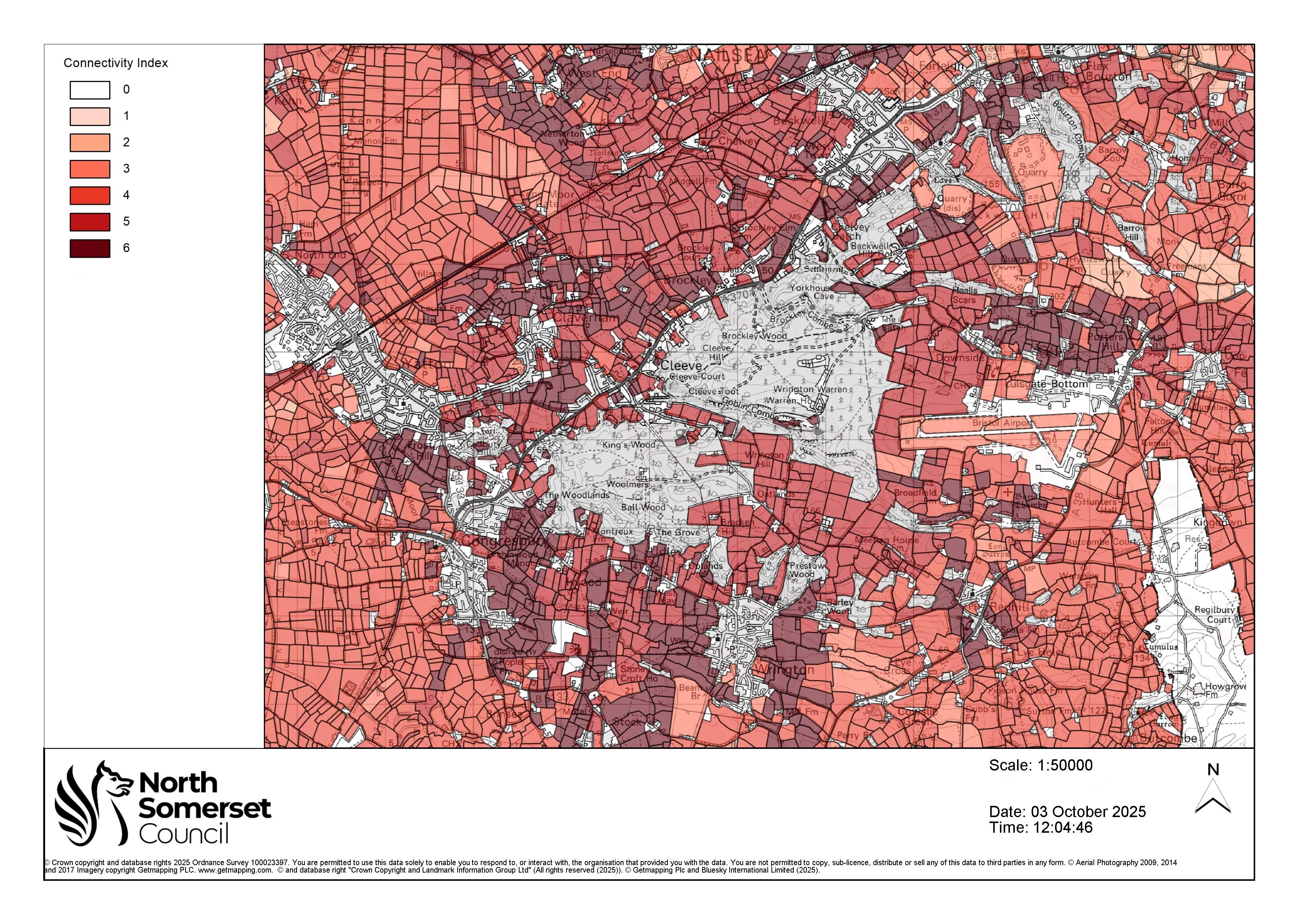
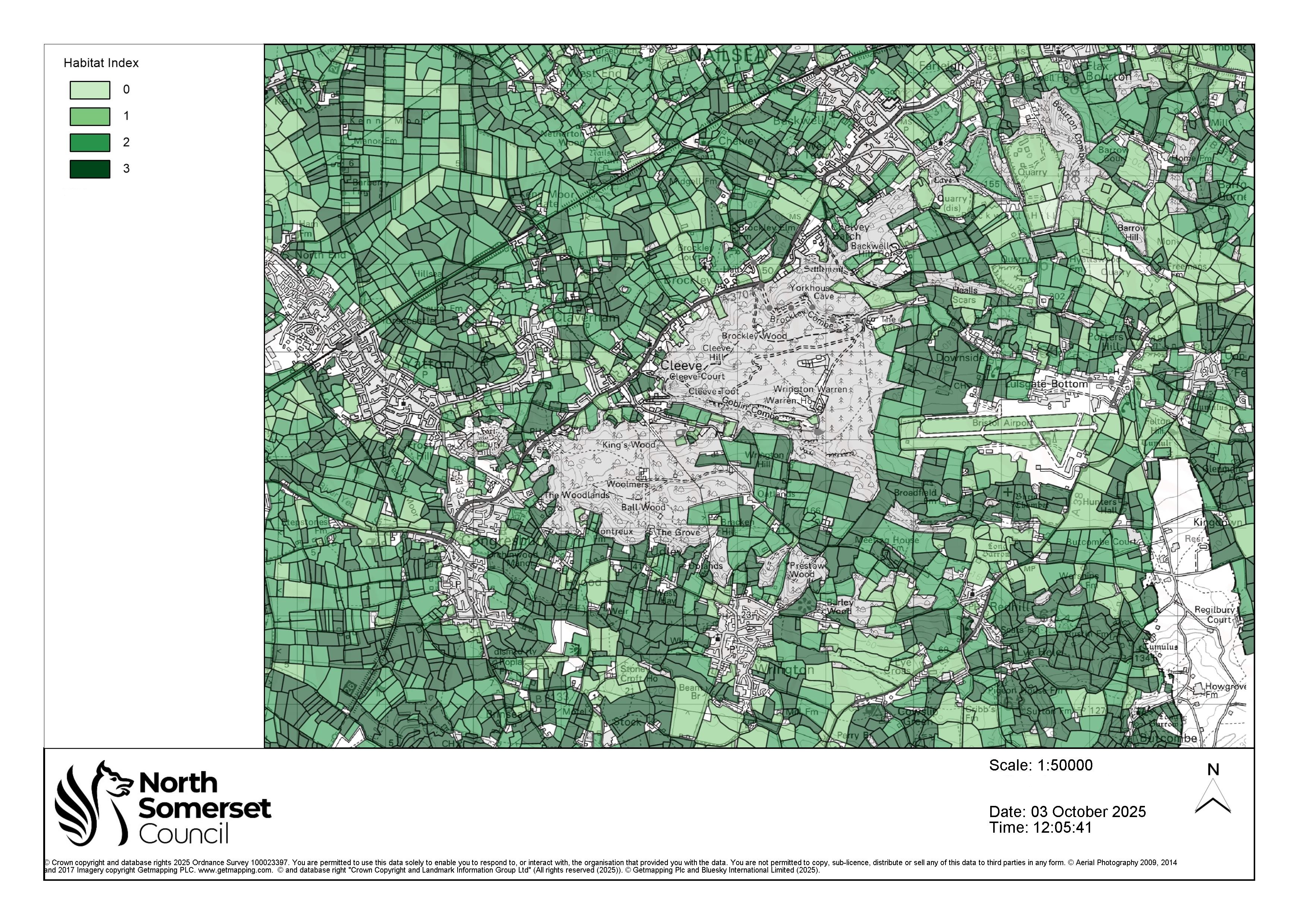
Locations for Nature Parks should be based on habitat suitability and connectivity.
This has been modelled for North Somerset Council through extensive research including tracking bat movements (please see Geckoella’s paper for more information).
Images on our maps highlight the connectivity and habitat modelling centred on the greater horseshoe bat maternity roosts. Areas shown in darker green and red on the maps represent the most important land for habitat and connectivity.
Smaller developments that cannot provide full bat mitigation on-site may be able to purchase bat mitigation units from a North Somerset Council Nature Park.
For more information or to enquire about purchasing units, please contact: Biodiversity@n-somerset.gov.uk.
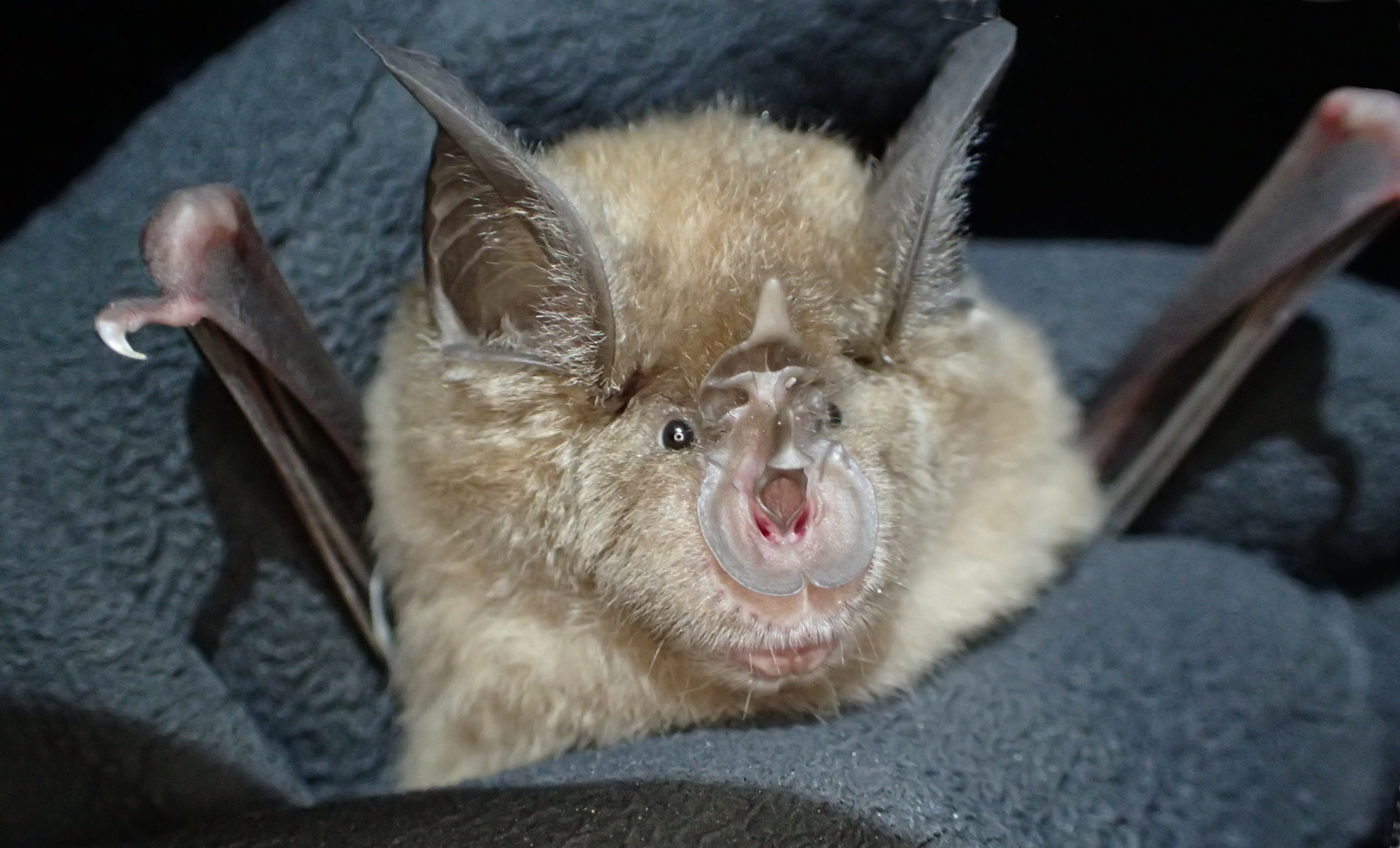
The Greater Horseshoe Bat (Rhinolophus ferrumequinum) is one of the largest bat species in the UK,. It's name comes from its distinctive horseshoe-shaped nose. The Lesser Horseshoe Bat (Rhinolophus hipposideros) is one of the smallest species. It has UK population of around 17,000.
In summer, both species form maternity colonies, usually in large old buildings. They will feed over grassland, woodland edges and along hedgerows. They prefer landscapes with a mix of pasture and woodland, particularly on south-facing slopes. These areas provide good insect supplies.
In winter, they hibernate in caves, old mines and other quiet underground spaces. These bats are sensitive to changes in their environment.
Threats to their survival include:
Greater Horseshoe Bats have already lost more than half of their range in the UK. The national population of about 4,000 individuals is split into around twelve main populations. These are each linked to summer roosts and associated winter hibernation sites.
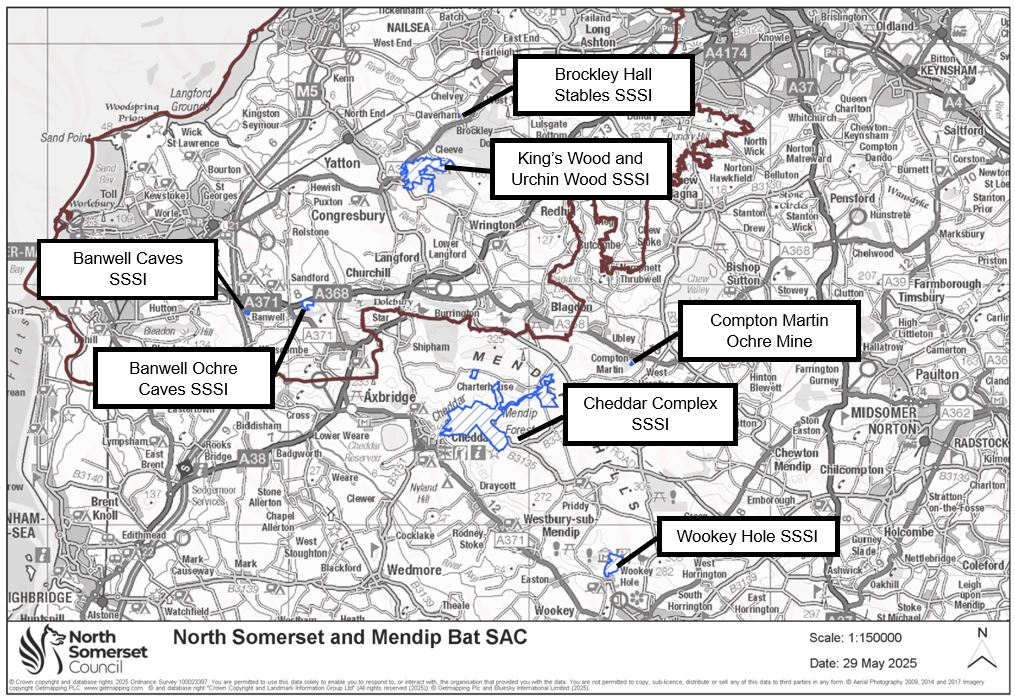
The North Somerset and Mendip Bats Special Area of Conservation (SAC) supports both Greater and Lesser Horseshoe bats.
In 2020, the population within the SAC was estimated at over 800 bats. This number has been declining since then.
The SAC remains an important site because it contains both maternity and hibernation locations. It also provides a wide range of supporting habitats across North Somerset and the Mendip Hills.
The North Somerset and Mendip Bats SAC Supplementary Planning Document (SPD) was adopted in January 2018. It is currently under review.
The SPD, together with the Habitat Evaluation Procedure (HEP), helps North Somerset Council assess how new developments could affect the Horseshoe bat populations. It sets out requirements for surveys, lighting design and habitat mitigation.
Because suitable land for bat mitigation can be difficult to secure, we have developed a strategic approach through the creation of North Somerset Nature Parks.